Drum Notation Symbols Explained: Accents, Ghosts, Flams
Once you can find each drum on the staff, the next thing that trips people up is the little marks around the notes. A greater-than sign over a hi-hat, a snare note in brackets, a tiny circle, a slash through a stem. Each one changes how you play the note, not which drum you play.
This guide covers the symbols you'll see in most beginner and intermediate charts, with a short example of each. If the staff itself is still new to you, start with How to Read Drum Sheet Music and come back.
Accent ( > )
An accent is a small sideways "greater-than" sign above or below a note. It means: play this one louder than the notes around it. On drums you usually get there by lifting the stick higher, not by pushing harder.
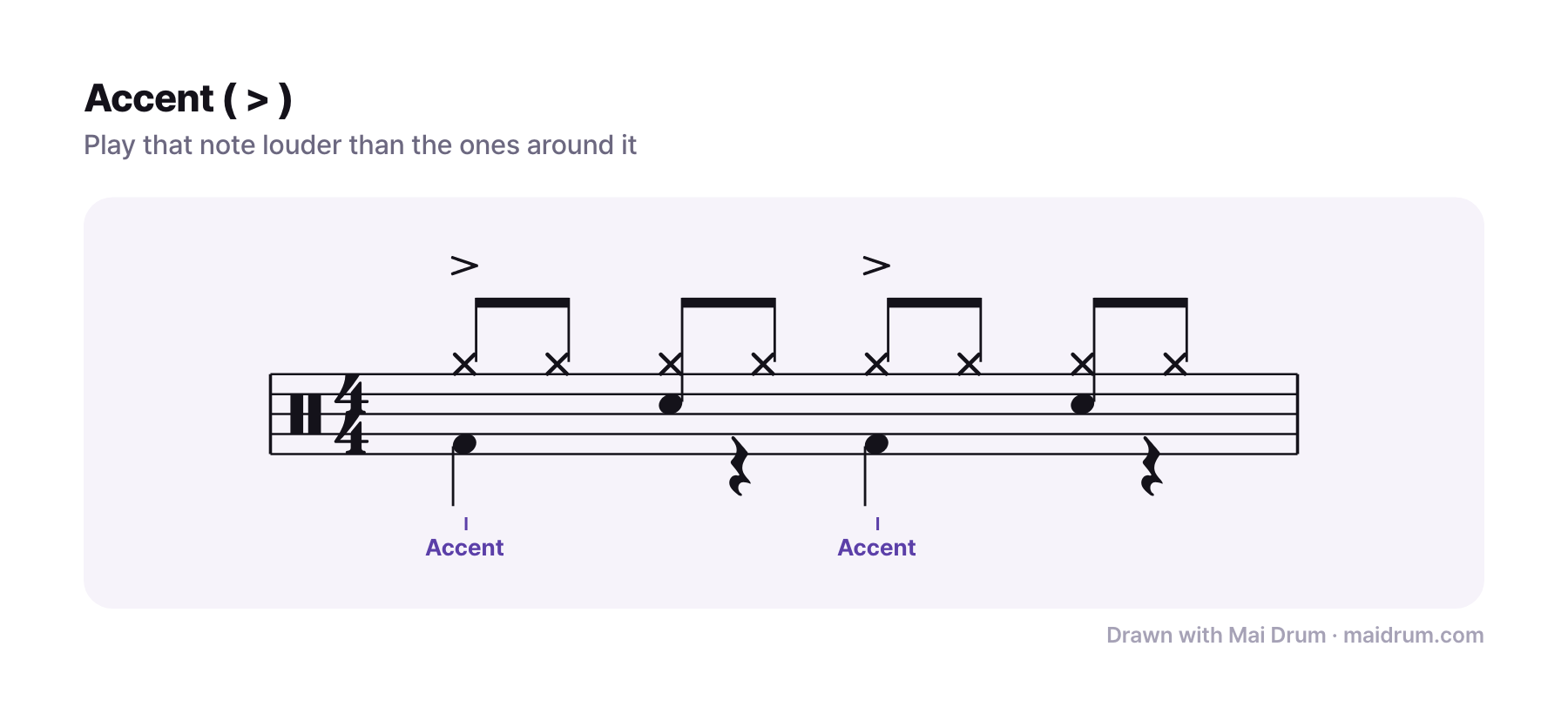
In this example the hi-hat plays straight eighths, but beats 1 and 3 are accented. Keep the other hi-hat notes low and relaxed so the accents actually stand out.
Ghost note ( note in brackets )
A note in parentheses is a ghost note: play it very softly, so it's felt more than heard. Ghost notes are almost always on the snare, and they're what makes a funk or R&B groove sound busy without sounding loud.
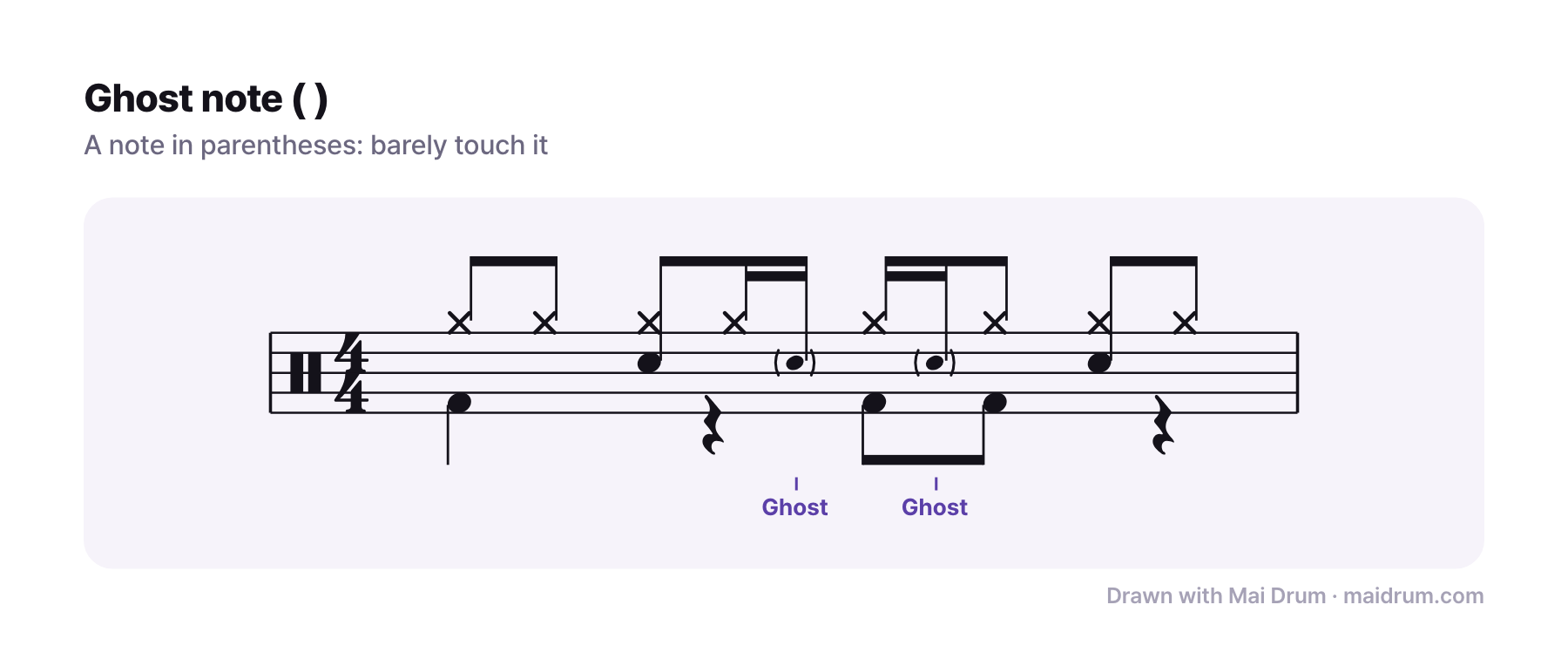
The trick is stick height. The backbeat on 2 and 4 comes from high up; the ghost notes come from an inch or two above the head. We go deeper into this in the ghost notes post.
Open ○ and closed + hi-hat
A small circle over a hi-hat note means open: ease your foot up so the cymbals separate and ring. A small + means closed: press the pedal down again to cut the sound off.
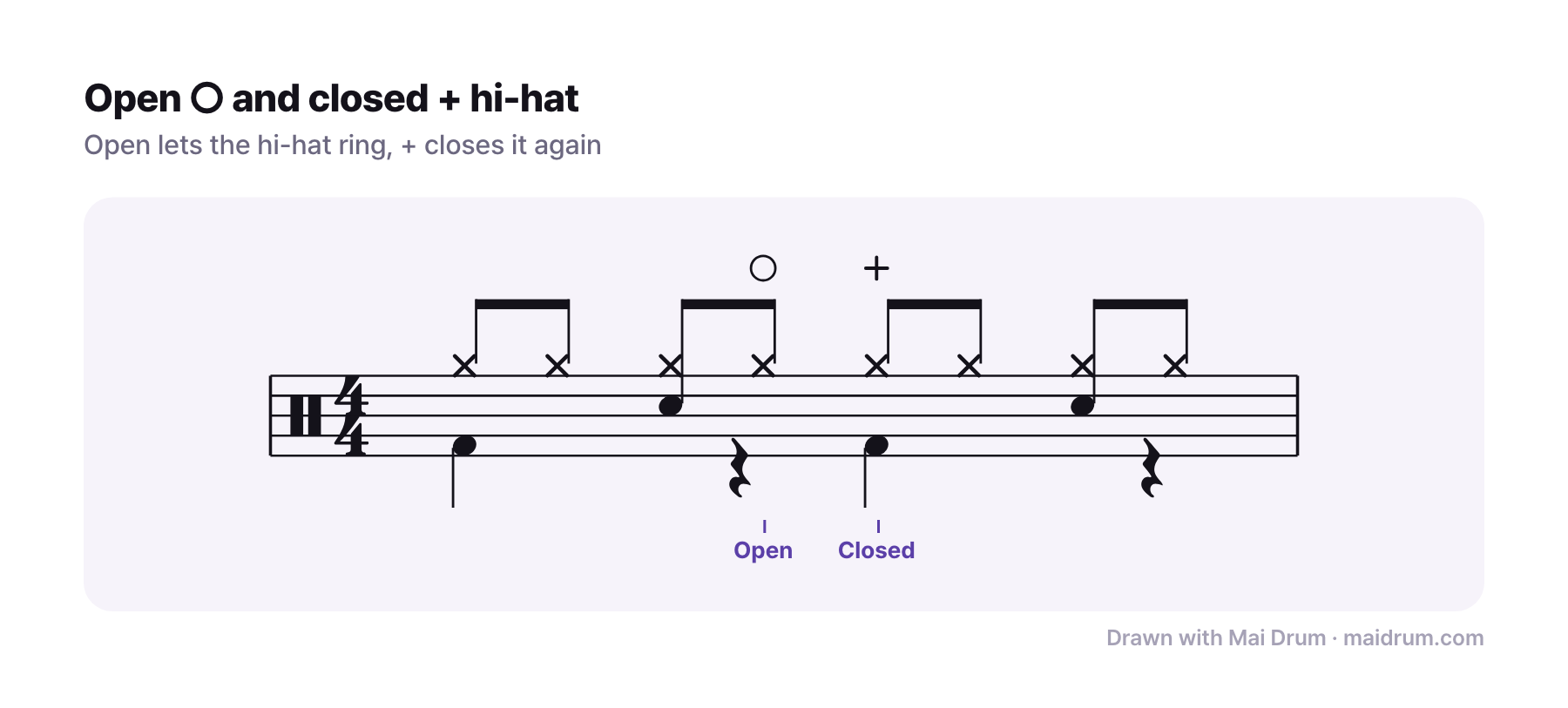
Open hi-hat notes usually sit on an "and" and close on the next beat, like the "& of 2" opening and beat 3 closing above. If a chart only shows the circle, close it on the next hi-hat note unless something says otherwise.
Cross stick ( x on the snare line )
When the snare is written with an x notehead instead of a round one, it means cross stick (also called side stick or rim click). Lay the stick across the drum with the tip resting on the head and click the shaft against the rim.
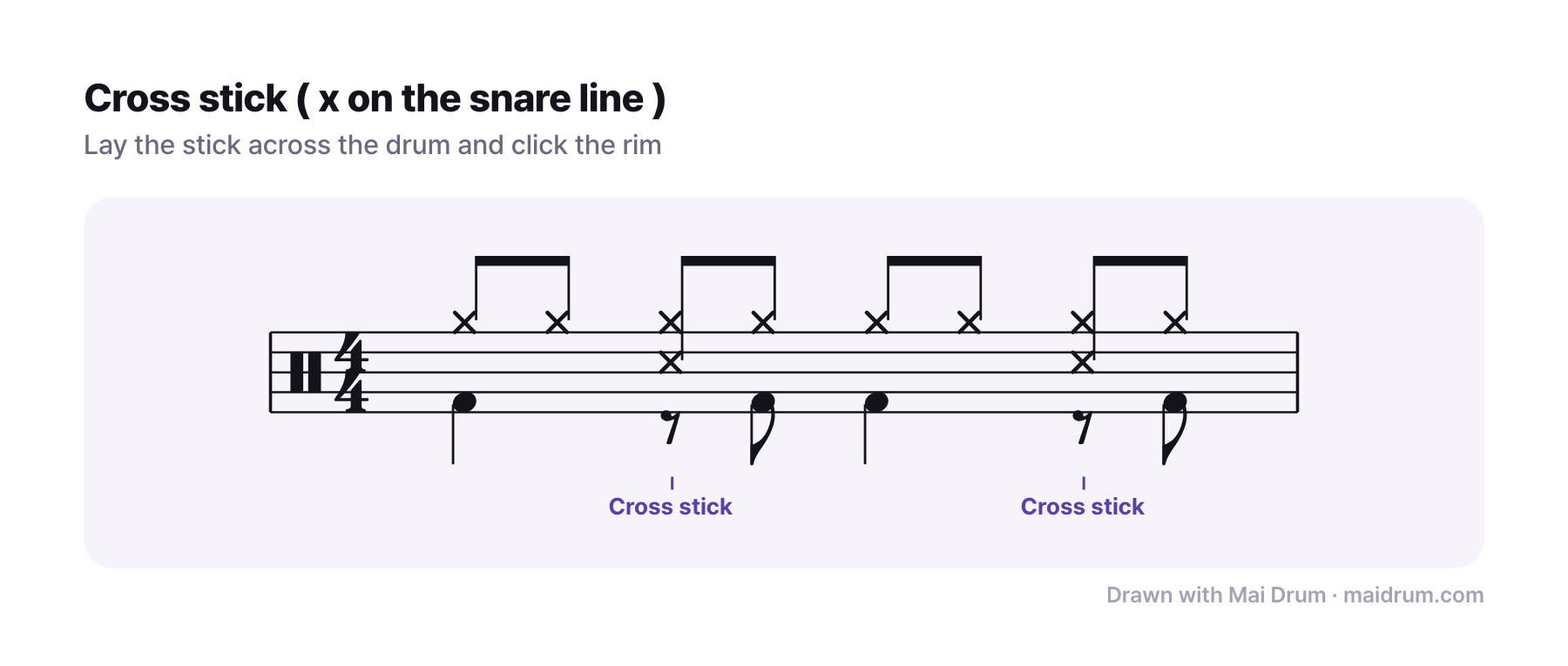
The note stays on the snare's space on the staff. Only the notehead changes, which is how you know it's still the snare, just played differently. You'll hear it in ballads, bossa novas and quiet verses.
Flam, drag and buzz roll
Some symbols add notes before the main note.
- Flam: one tiny grace note just before the main note, played by the other hand. It sounds like "flam", one fat note instead of two separate ones
- Drag: two tiny grace notes before the main note, played as a quick double
- Buzz roll ( z or a slash on the stem ): press the stick into the head so it bounces many times, giving a short buzz instead of a single hit
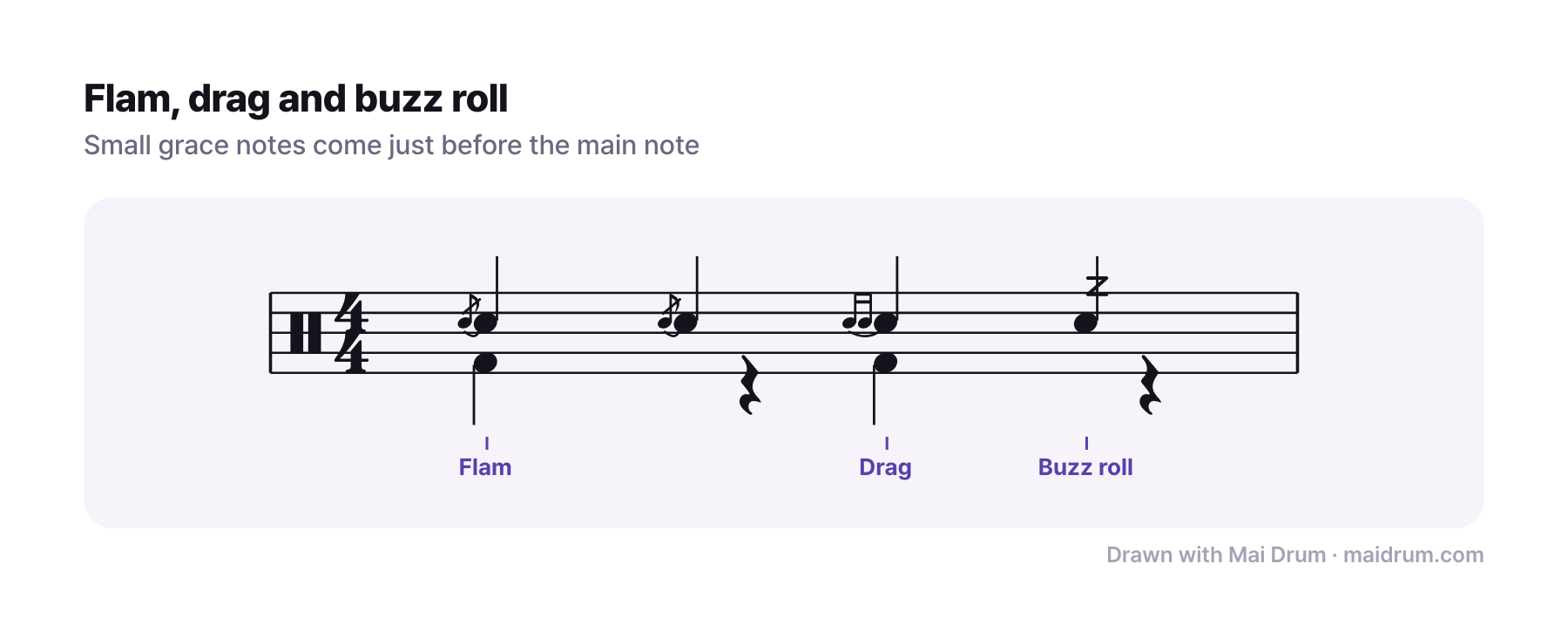
Grace notes are played quietly and very close to the main note. The main note still lands exactly on the beat.
A quick reference
- > accent: louder
- ( ) ghost note: very soft
- ○ open hi-hat, + closed hi-hat
- x on the snare line: cross stick
- small note before: flam (one) or drag (two)
- z or slash on the stem: buzz roll
You won't see all of these on every chart, and some publishers draw them a little differently, so it's worth checking the key at the front of a book. But with these in your head, very little on a typical drum chart will surprise you.
All the examples here were written in Mai Drum, where you pick a symbol from the palette and tap the cells. It's free in your phone's browser if you want to try writing a few yourself.