Ghost Notes on Drums: How to Read and Play Them
Ghost notes are the quiet snare notes that make a groove feel alive. You often can't pick them out individually when you listen to a record, but take them away and the beat suddenly sounds stiff. They're a big part of funk, soul, R&B, and a lot of modern pop and rock.
They're also one of the easiest things to read and one of the hardest to play well. Here's how they're written and how to practise them.
How ghost notes are written
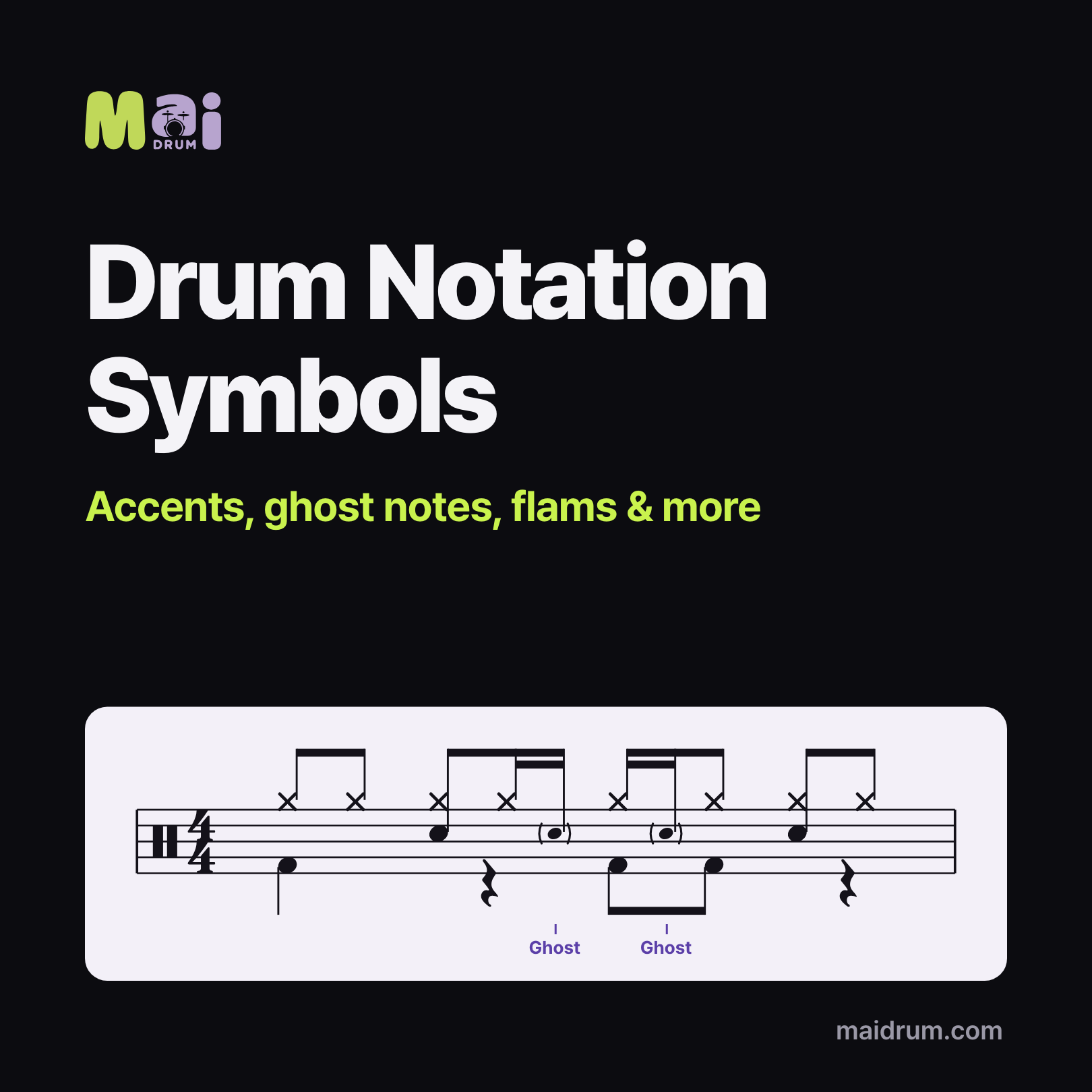
A ghost note is a normal snare note with parentheses around the notehead. That's it. The rhythm is read exactly like any other note; the brackets only tell you to play it very softly.
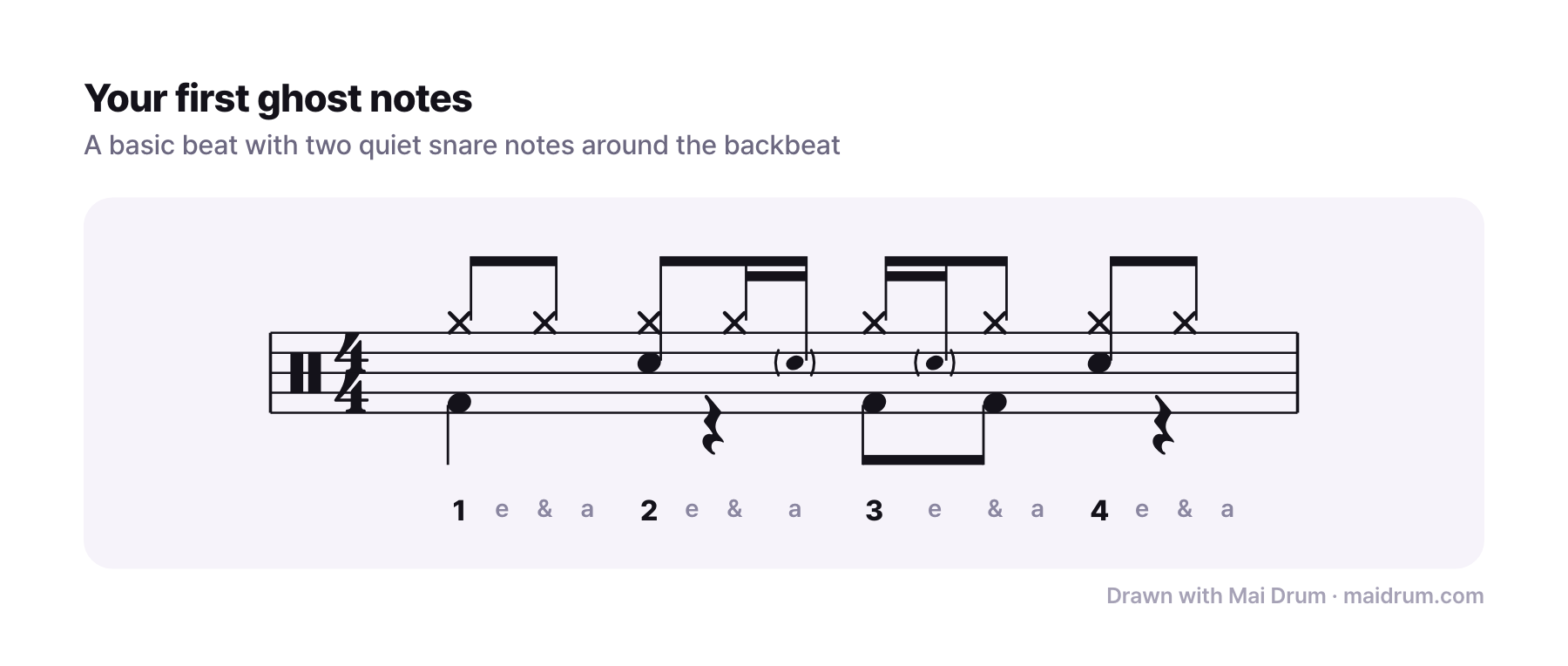
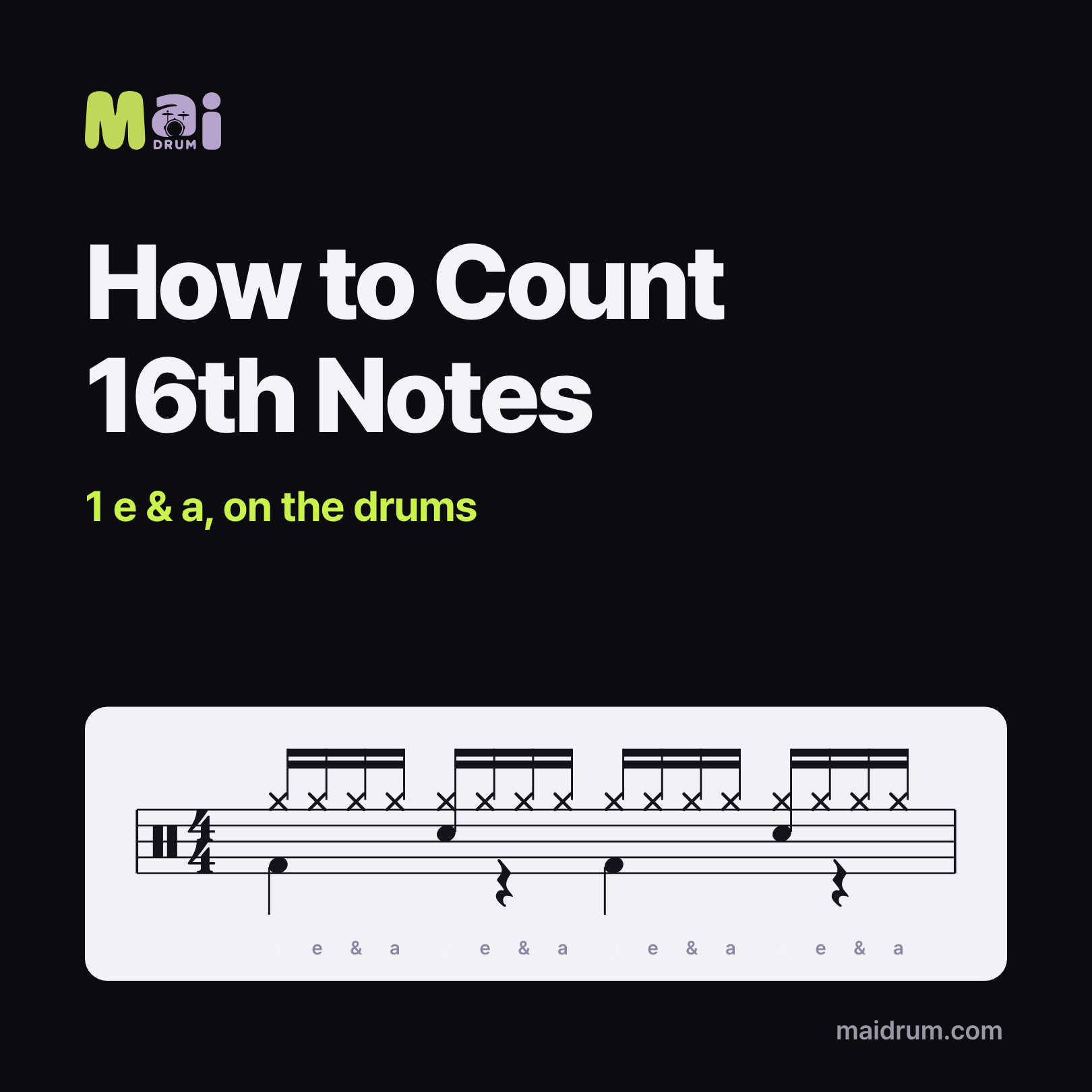
In this beat the backbeat on 2 and 4 stays loud. The two ghost notes sit on the a of 2 and the e of 3, wrapped around the middle of the bar. If sixteenth-note counting is new, read How to Count 16th Notes first.
It's all about stick height
Players often try to play ghost notes "gently," and the result is uneven: some disappear, some pop out. The more reliable approach is stick height:
- Backbeat: the stick starts high, around 8 to 12 inches above the head
- Ghost note: the stick starts about an inch above the head and just drops
If the stick starts low, the note can only be soft. You don't have to control it on the way down; you control it by where you start.
The two-height exercise
This is the best single exercise for ghost notes. Play sixteenth notes on the snare with one accent on each beat and ghost notes on the other three.
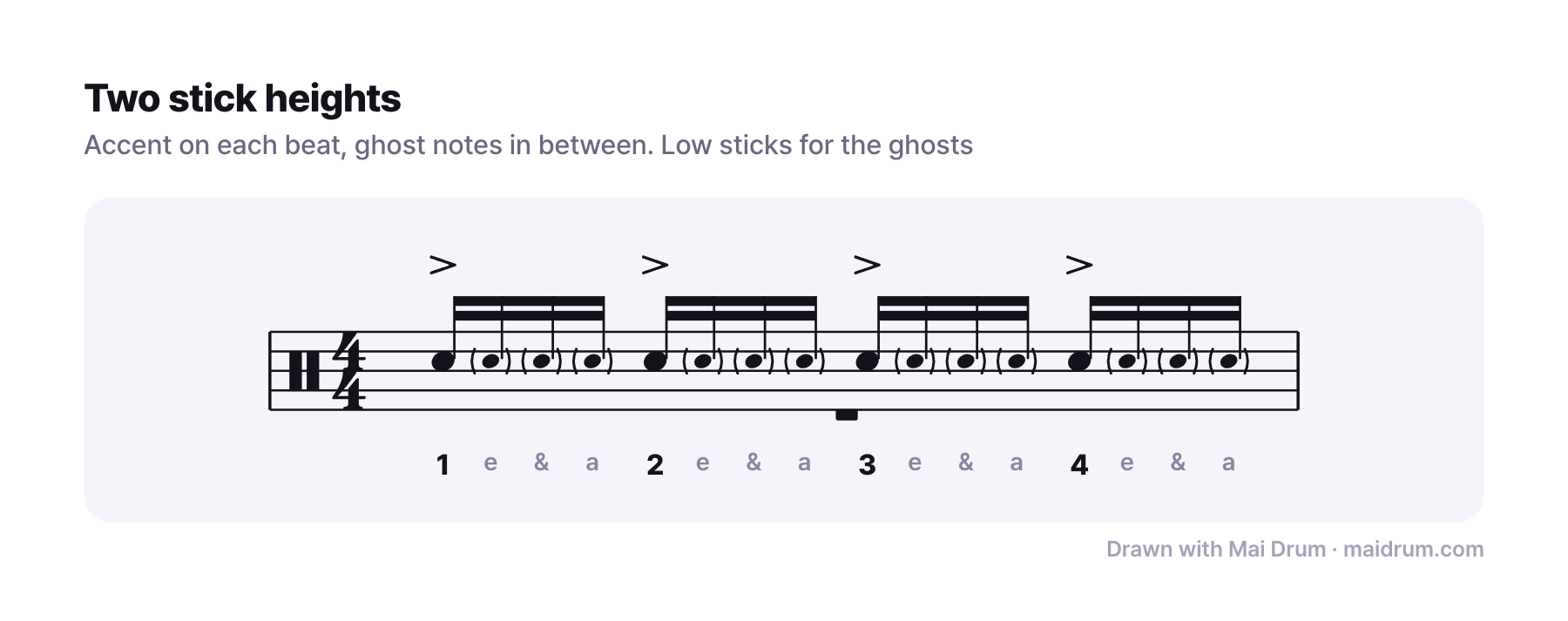
Count "1 e & a 2 e & a" and keep the accents big and the ghosts tiny. Go slowly enough that every ghost note is the same volume. When that feels easy, move the accent to the "e," then the "&," then the "a." It's harder than it sounds, and it's exactly the control a groove needs.
A ghost-note groove
Now put it into a beat. Hi-hat plays eighths, the backbeat stays on 2 and 4, and ghost notes fill the gaps around it.
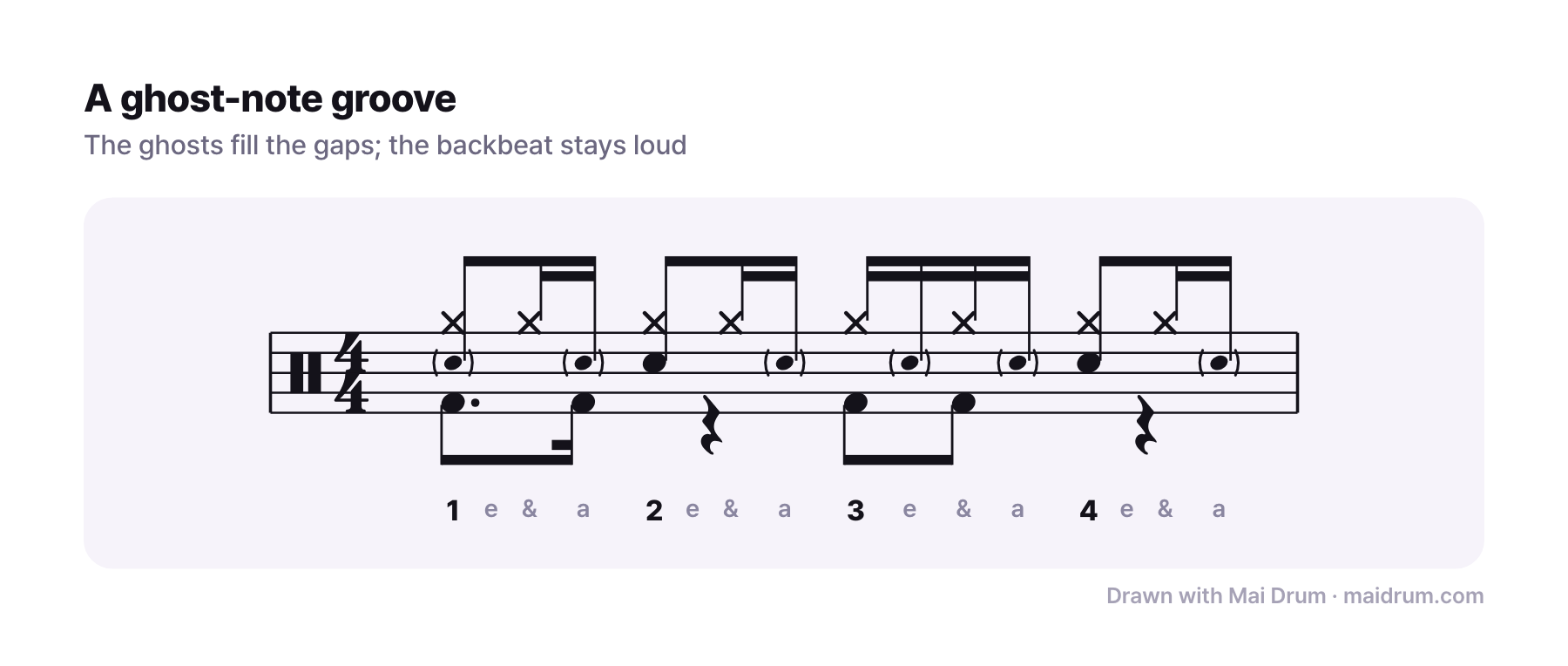
Learn it in layers: first hi-hat and kick, then add the backbeat, and only then add the ghost notes one at a time. If a ghost note makes the hi-hat stumble, take it out, slow down, and add it back.
Common mistakes
- Ghosts too loud. If you can clearly hear each ghost note on a recording of yourself, they're probably too loud. They should sit under everything else
- Backbeat too soft. Players concentrate so hard on the quiet notes that the loud ones shrink. Keep the contrast big
- Rushing. Ghost notes between beats tend to creep earlier. Practise with a metronome and count out loud
The examples here were written in Mai Drum. Choose "Ghost" in the palette and tap the cells; playback plays them quieter than normal notes, so you can hear the contrast you're aiming for. For the other common symbols, see Drum Notation Symbols Explained.