Drum Triplets and the Shuffle Feel, Explained
Most of what you play on drums divides each beat into two or four. Triplets divide it into three. That one change gives you the rolling feel of a blues shuffle, a 12/8 ballad, and a lot of the classic fills that sound like they're "tumbling" around the kit.
Reading eighth-note triplets
A triplet is three notes squeezed into the space of two. On a chart you'll see three notes beamed together with a small 3 above or below them, sometimes with a bracket.
Count them as "1 trip let, 2 trip let, 3 trip let, 4 trip let." Some teachers say "1 la li" or "1 & a" instead; the name doesn't matter as long as the three notes are perfectly even.
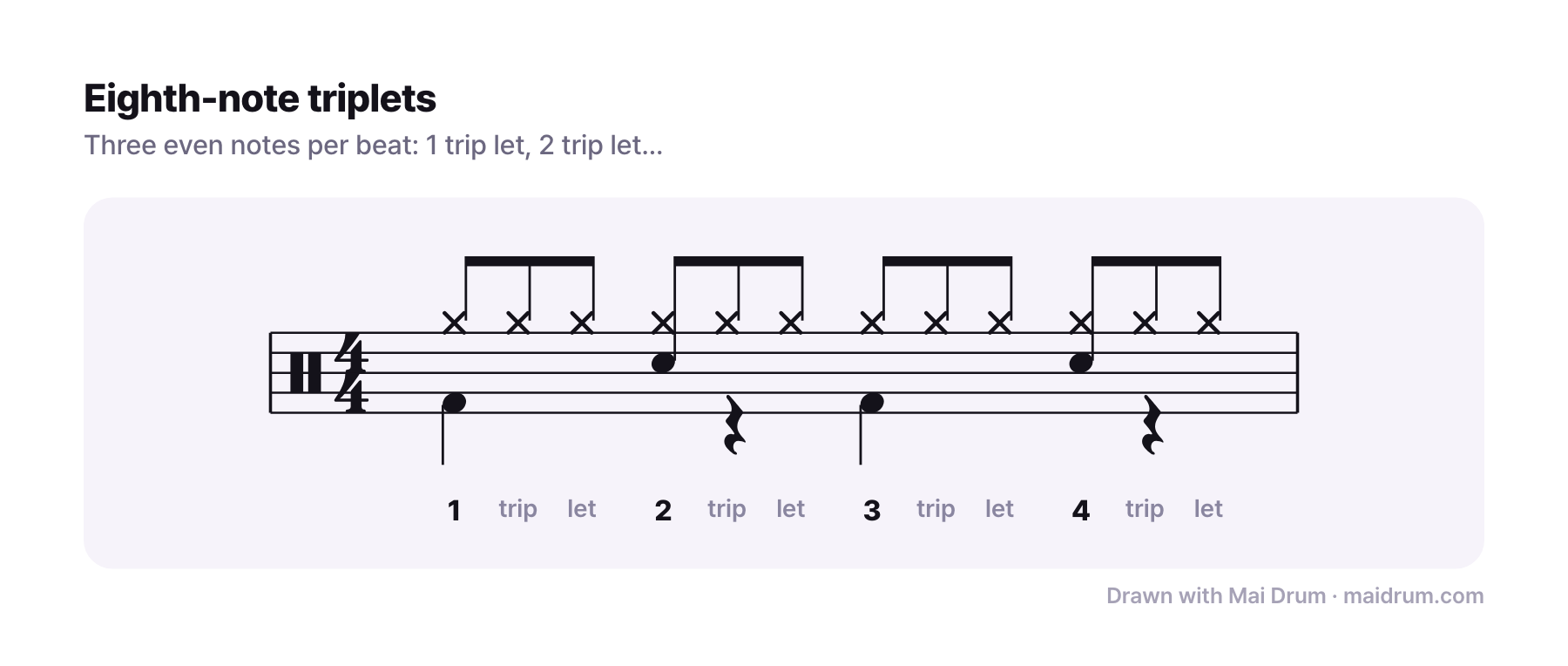
Play this slowly and listen for three equal notes per beat. If it starts to sound like "1-and-a" with a short gap, the notes have drifted toward sixteenths. Slow down and count out loud.
From triplets to a shuffle
A shuffle is what you get when you leave out the middle note of each triplet. Instead of three even notes, you play the first and the third: long, short, long, short.
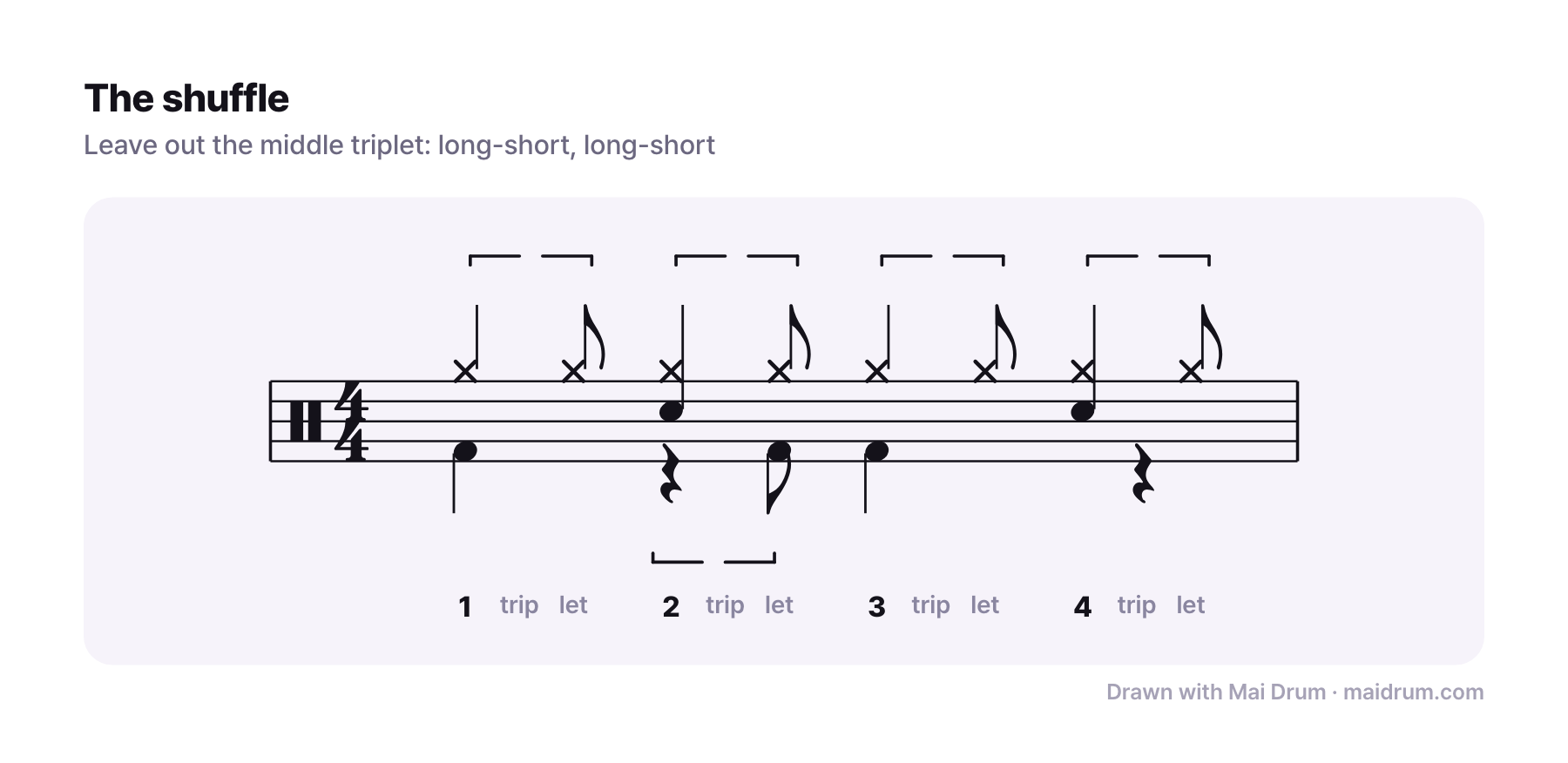
Count the full "1 trip let" in your head, but only play on "1" and "let." The kick in this example also uses a triplet: it lands on the "let" of 2, pushing into beat 3. That's what gives a shuffle its bounce.
You'll sometimes see a shuffle written with straight eighth notes and a note at the top of the chart saying "shuffle" or "swing," often with a little picture showing two eighths equal to a triplet. It means the same thing: play the written eighths as long-short. It's simply easier to read than a page full of triplet brackets.
A triplet fill around the kit
Triplets are perfect for fills because each group of three fits naturally on one drum.
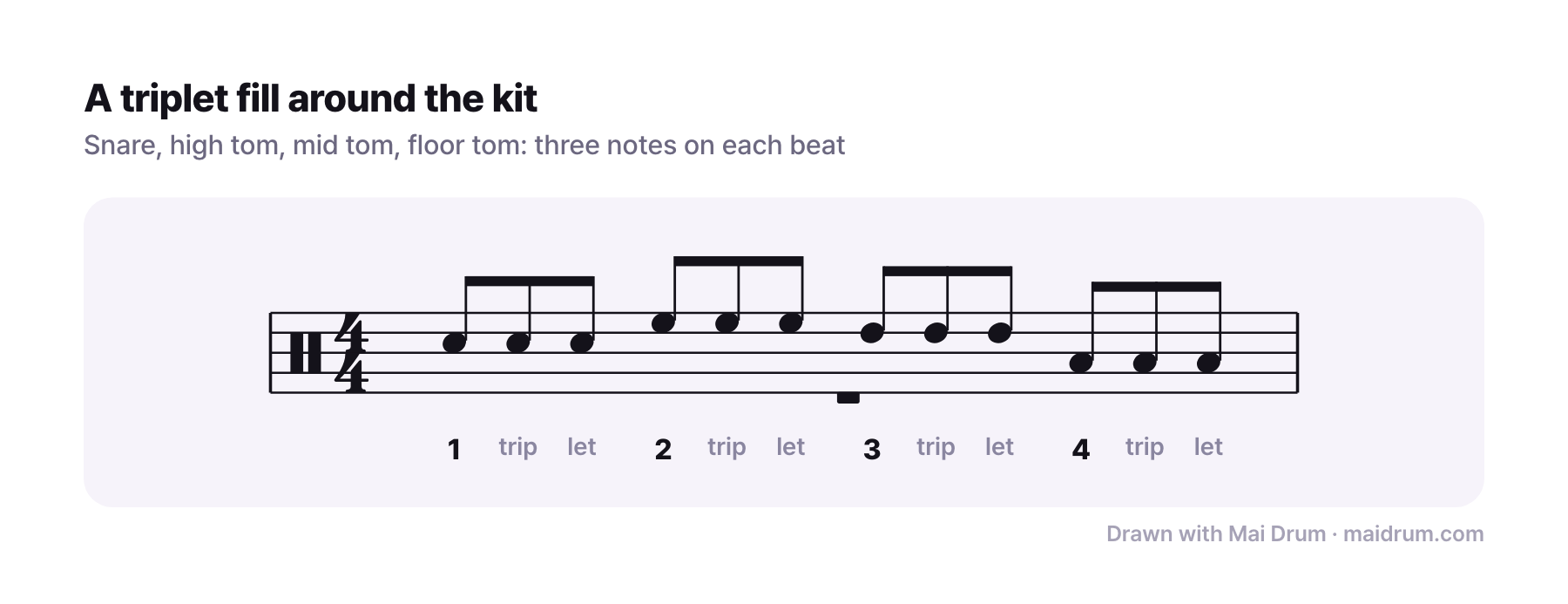
Snare on beat 1, high tom on beat 2, mid tom on beat 3, floor tom on beat 4, three notes each. Use alternating sticking (right-left-right, left-right-left) and keep every note even as you move around the kit. Then try ending with a crash and kick on the next downbeat.
Practice tips
- Lock in the count first. Say "1 trip let" with a metronome before you play anything
- Accent the beat. A small accent on each "1, 2, 3, 4" helps you keep your place in the bar
- Switch between straight and triplet. Play a bar of eighths, then a bar of triplets, then back. It trains your ear to feel the difference instantly
These examples were written in Mai Drum, where you tap a beat's header to split it into three and the triplet bracket is drawn for you. If you need a refresher on counting the even kind first, read How to Count 16th Notes.