How to Transcribe Drums from a Song, Step by Step
Writing down a drum part from a recording, often called transcribing or "taking it off the record," is one of the best ways to learn. You hear exactly what the drummer played, you understand why it works, and you end up with a chart you can practise from.
It can feel overwhelming at full speed. The trick is to never try to hear everything at once. Here's a step-by-step approach that works for most songs.
Before you start
- Find the tempo. Tap along to the beat and note the BPM. It tells you how dense the parts are likely to be
- Find bar 1. Count "1 2 3 4" until you're sure where the bar starts. Most songs make it obvious with a crash or a big kick
- Pick a short section. Start with one or two bars of the main groove, not the whole song
- Slow it down. Listening at half speed changes everything. You'll hear notes you didn't know were there
Step 1: Write the hi-hat (or ride)
The timekeeping part is usually the easiest to hear and gives you the grid for everything else. Is it eighths? Sixteenths? Is there an open hi-hat somewhere?
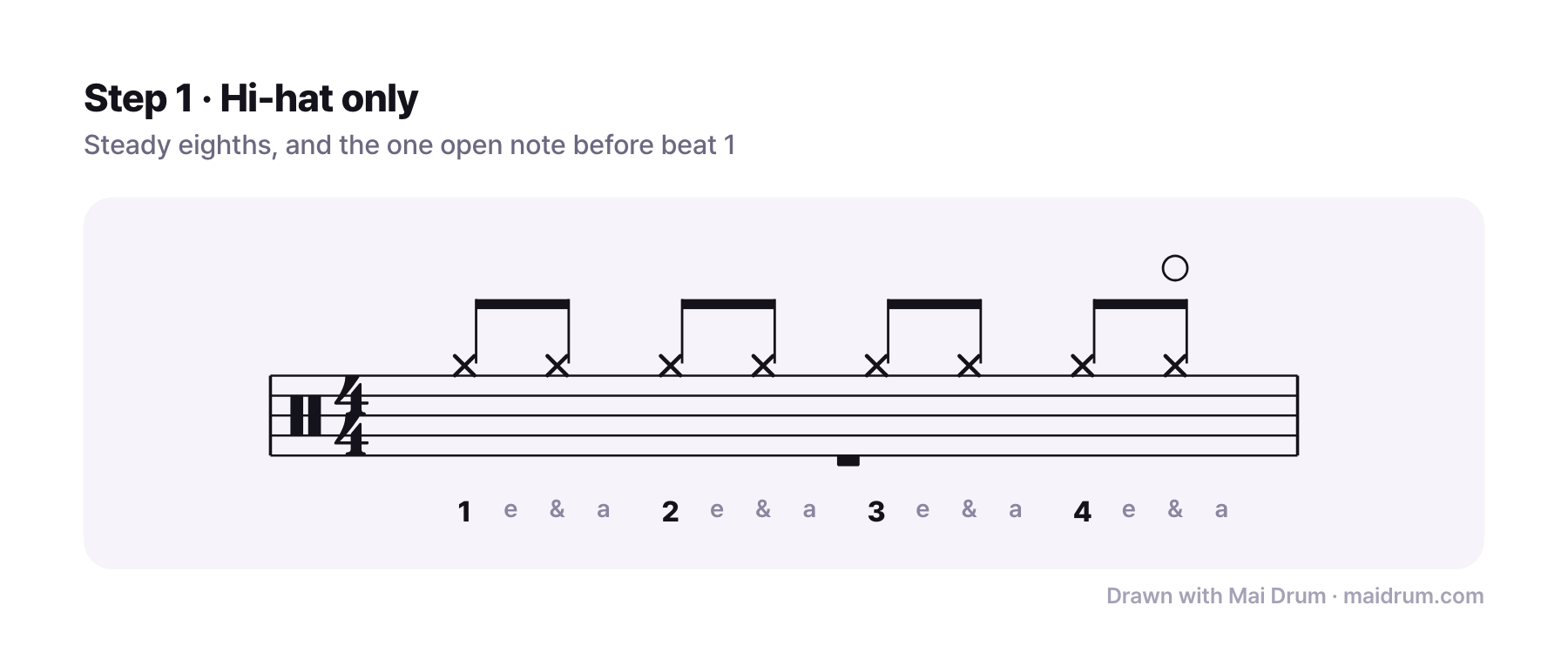
In this groove the hi-hat plays steady eighths, and the last one is open, ringing into the next bar.
Step 2: Add the snare, then the kick
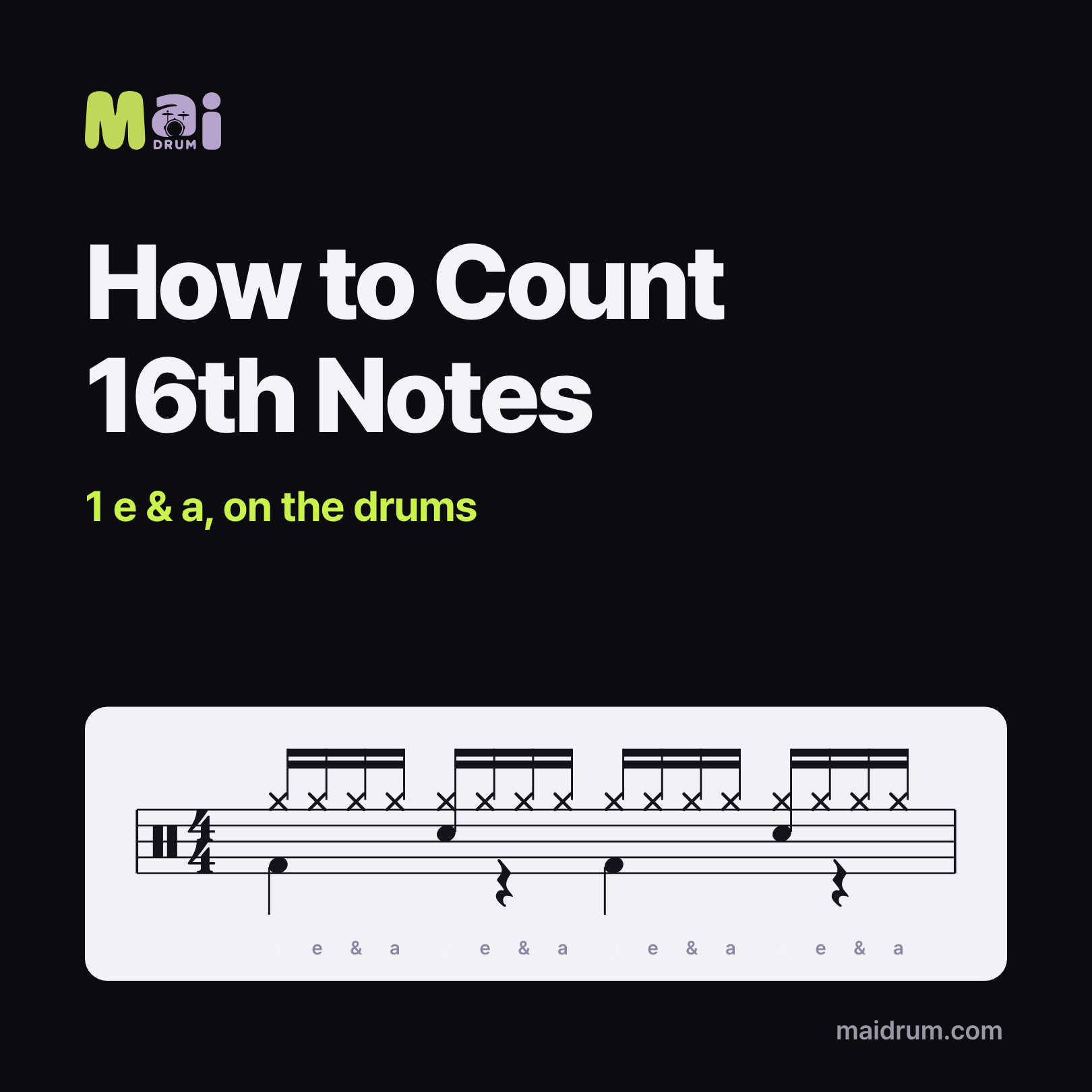
The backbeat is usually on 2 and 4, so write that first. Then go back for the kick, which is often the hardest part to hear. Listen for it under the bass guitar and count every sixteenth out loud.
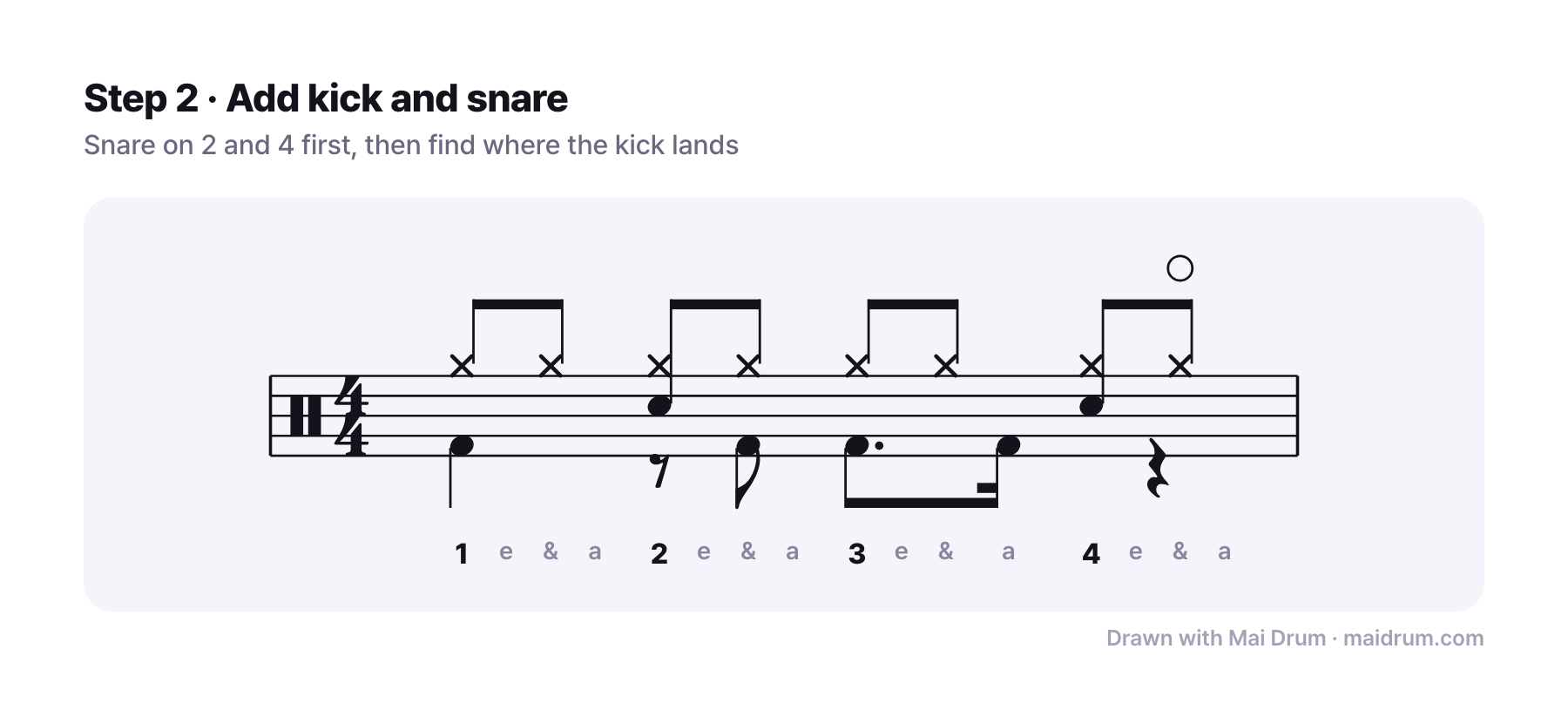
Here the kick lands on 1, the & of 2, 3 and the a of 3. If you're not sure whether a kick is on the "&" or the "a," loop just that beat at slow speed and count it.
Step 3: The quiet details
Only once the main parts are right should you go hunting for ghost notes, flams and small variations. They're the hardest to hear, and they're easier to place once everything around them is already written.
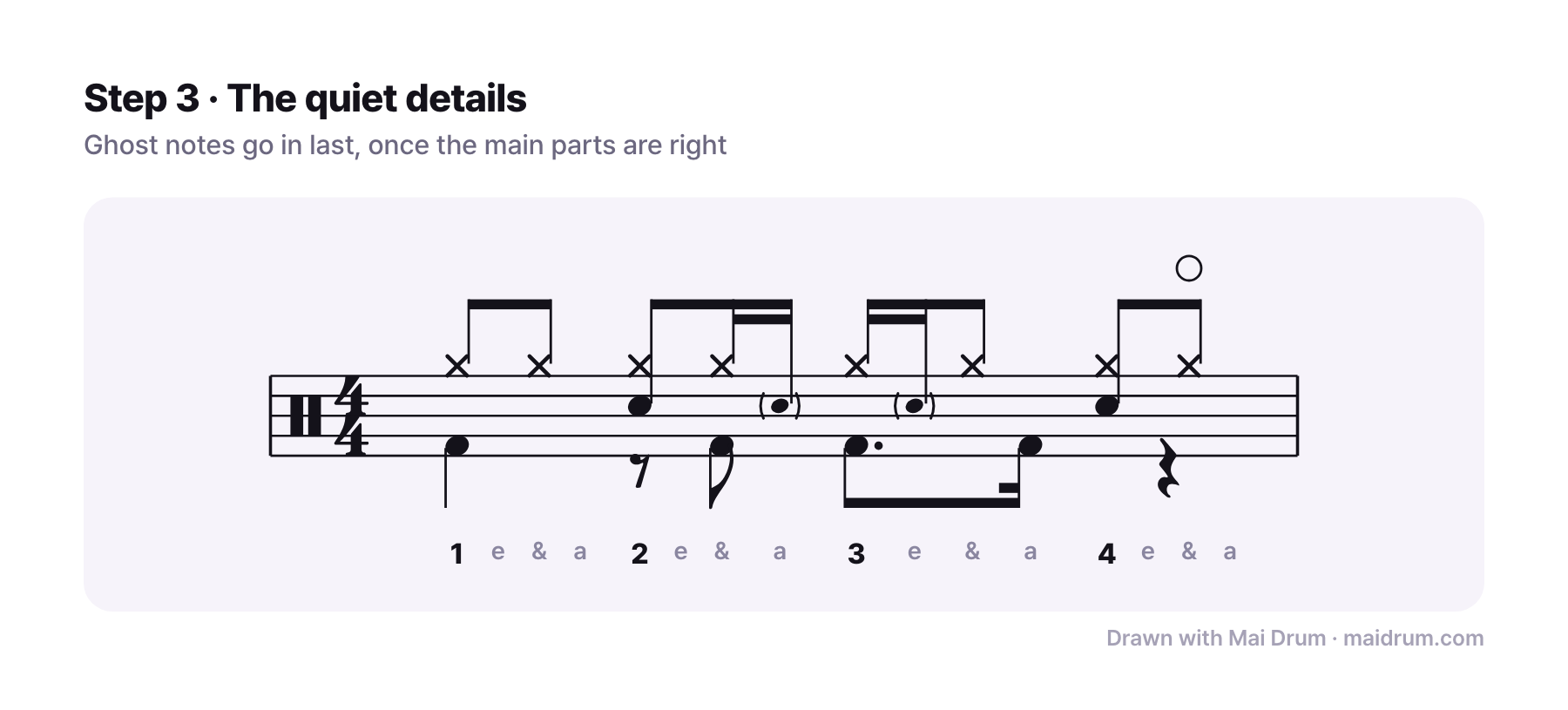
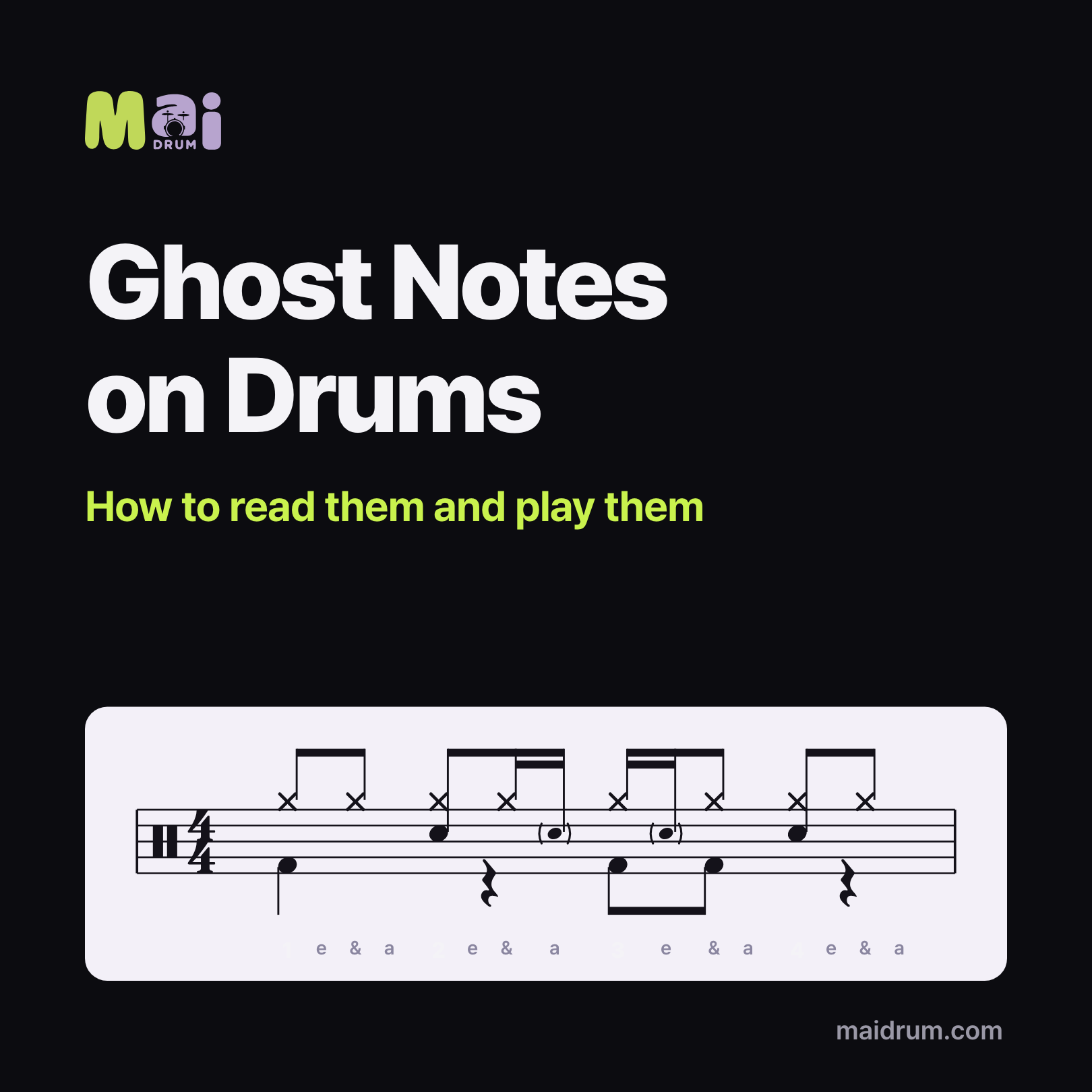
Two ghost notes on the snare complete this groove. Don't worry if you can't catch every one. A transcription that's right on the main parts is already useful.
Tips that save a lot of time
- Loop tiny sections. Two beats at half speed beats a whole verse at full speed
- Play it back and compare. Play your chart along with the recording. Wrong notes jump out immediately
- Write the repeats, not every bar. Most grooves repeat. Write it once, then only note the bars that change
- Trust your count, not your eyes. If something looks odd on paper but sounds right when counted, it's probably right
Doing it all in one place
The examples above were written in Mai Drum. In the iPad and Android tablet app, the Transcribe tab plays a YouTube link or an mp3/mp4 file right next to the grid. You can slow it down to 0.25×, loop a section, tap the tempo, mark where bar 1 starts and let the bars follow the music while you tap notes in.
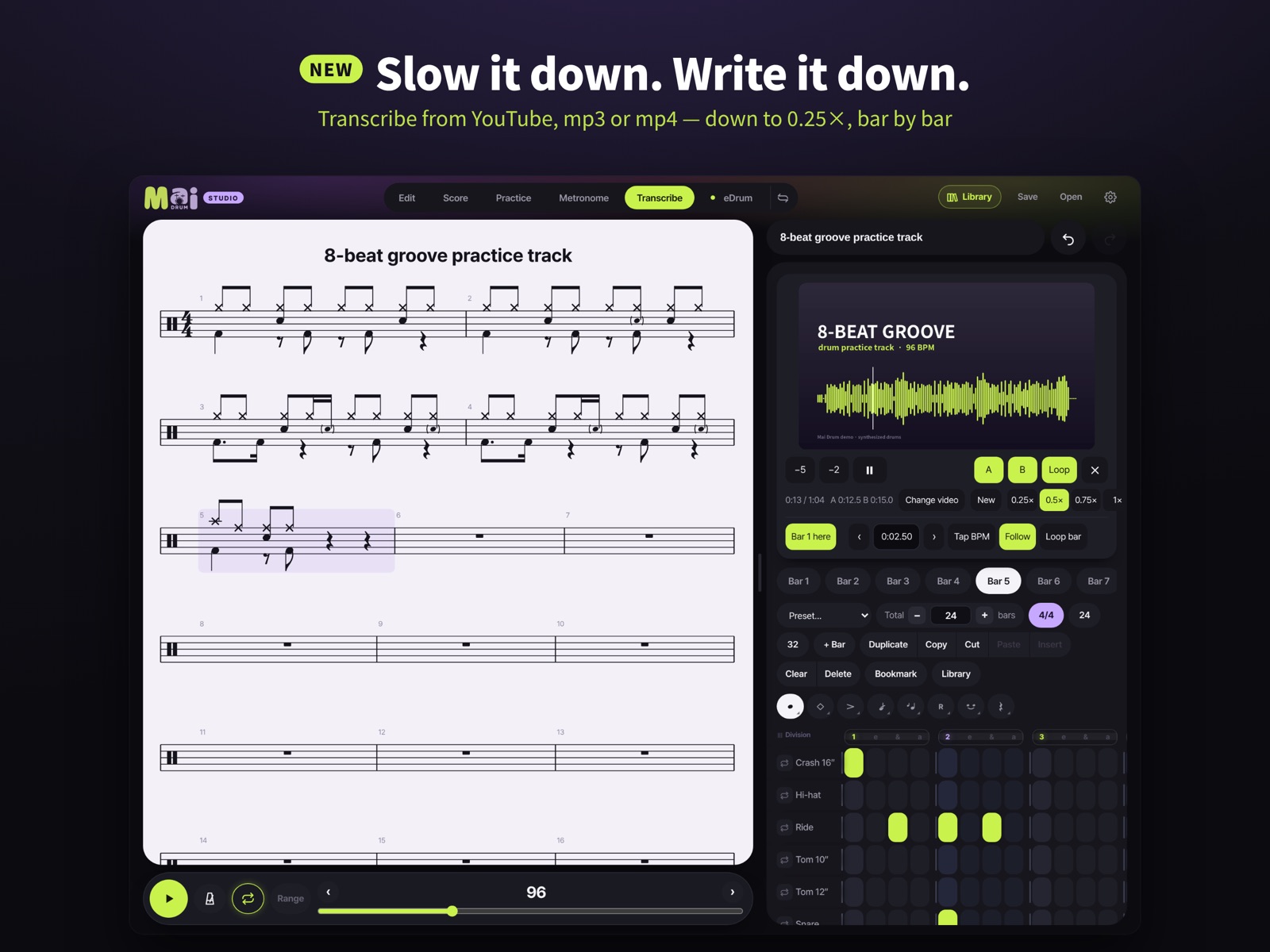
Whatever tool you use, the order is what matters: tempo and bar 1, slow it down, timekeeping first, then kick and snare, then the details. If any of the symbols are unfamiliar, Drum Notation Symbols Explained covers them.